
07 September 2026
Press
To mark World Atopic Dermatitis Day (on the 14th of september), the national clinical research network GREAT-FRADEN, labelled F-CRIN, provides an overview of the current state of care for this condition and advances in clinical research. In recent years, the introduction of new treatment options has significantly expanded the range of treatment possibilities for moderate to severe forms of atopic dermatitis. This significant progress now raises new challenges for research, particularly regarding the personalisation of treatment strategies and the evaluation of treatments in real-world settings.
A common condition, yet one that suffers from misconceptions
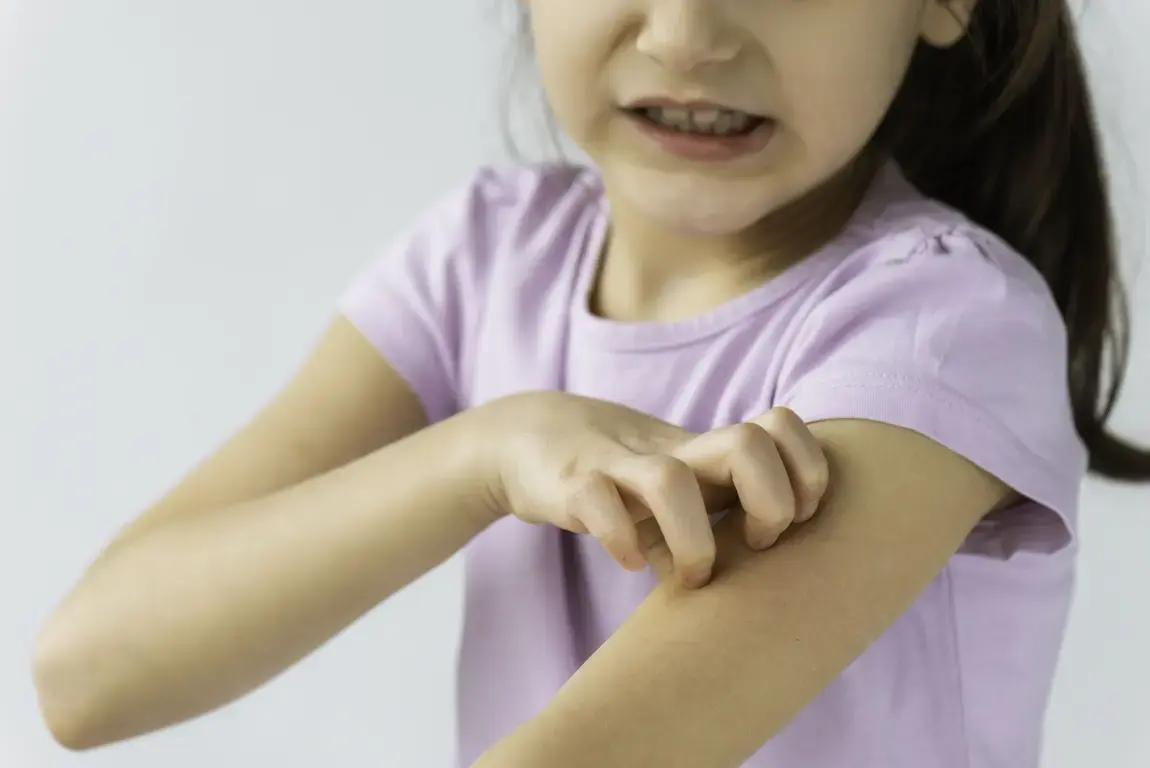
Atopic dermatitis (AD) is a chronic inflammatory skin condition that affects 10 to 15% of children and 3 to 4% of adults in France. It usually begins in childhood and is characterised by dry skin, inflammation and itching, which can sometimes be very severe.
AD has long been subject to numerous misconceptions that have affected patient care: whilst it may occur alongside other conditions in the same group, such as asthma, allergic rhinitis or certain food allergies, atopic dermatitis is not itself a skin allergy, but rather a hypersensitivity of the skin.
Moderate to severe forms, which account for around 50% of cases, have a major impact on quality of life: the itching can disrupt sleep, concentration and daily activities and may be accompanied by significant psychological distress, particularly when the lesions are visible. In children, schooling and social life may also be affected.
Care that has changed profoundly
For several decades, the management of mild to moderate forms of AD relied mainly on skin moisturisation and topical anti-inflammatory treatments, particularly topical corticosteroids, to relieve flare-ups.
As these options were not sufficiently effective for patients with severe forms of AD, treatment options have expanded considerably since 2018. Management now relies in particular on two main categories of treatment: biotherapies and JAK inhibitors, with seven treatment options (four biotherapies and three JAK inhibitors), which offer doctors and patients a wider range of treatment choices. Today, more than 80% of patients with these forms of the condition can be treated using these new therapies.
However, the choice of treatment is still largely based on the patient’s clinical characteristics and possible risk factors or associated conditions. Research must now enable therapeutic strategies to be better personalised, in order to identify the most suitable treatments for each individual.
Beyond treatment: a holistic approach
The guidelines published in 2025 by the Evidence Centre of the French Society of Dermatology, with the involvement of the GREAT-FRADEN network, emphasise that the management of atopic dermatitis goes beyond drug treatments. Topical care, skin hygiene and the management of irritants constitute the first stage of management.
Therapeutic education also plays an important role in this care pathway, offering patients comprehensive support in managing their condition. It may sometimes be accompanied by psychological support, in order to better take into account the patient’s feelings and experiences of their condition and thus prevent a situation of treatment failure from leading to an escalation in treatments or a loss of confidence.
Clinical research: a driver for improving practice
Clinical research on atopic dermatitis has expanded significantly with the emergence of new treatment options. However, clinical trials conducted before a treatment becomes available do not provide all the answers to the questions that subsequently arise in day-to-day practice.
Real-world data has therefore become essential for assessing the efficacy and safety of treatments in patients monitored in routine clinical practice, over longer periods and in a wider variety of situations than those found in clinical trials.
This is notably one of the roles of the GREAT-FRADEN network: to bring together French centres of expertise in order to conduct multicentre studies and build cohorts of patients followed over time. These data help to better document the use of treatments in routine practice, but also to answer questions that cannot always be investigated within the framework of industrial research.
Since 2018, the network has been regularly carrying out research on AD and its treatments. To name but a few: the DUPISWITCH trial examined strategies to be adopted in the event of adverse effects leading to a change in treatment; the TRALO-OEIL study looked at ophthalmological adverse effects associated with biologics; the PREGRALL study looked at the prevention of atopic dermatitis in children at risk through prebiotic supplementation of the mother during pregnancy. Although the results did not demonstrate a preventive effect at one year of age, the children are being monitored until they reach the age of five.
Building the treatments of tomorrow
The management of atopic dermatitis has come a long way in recent years, with new treatment options becoming available. However, to benefit from these, you must first speak to your GP. Access to dermatologists can be difficult, and their expertise remains essential for certain prescriptions. You should therefore not be put off by a lack of available appointments on online booking platforms: GPs can draw on healthcare networks and consult dermatologists with whom they work to refer their patients and facilitate access to this expertise. Research is also continuing to advance, particularly in children. Paediatric clinical trials are more complex to organise: they require a high level of commitment from families and can raise legitimate concerns among parents. However, these trials are essential: it is thanks to them that we can obtain the data needed to evaluate treatments in children and, once their efficacy and safety have been demonstrated, enable their authorisation for this population.” emphasises Professor Sébastien Barbarot, coordinator of the GREAT-FRADEN network and dermatologist at Nantes University Hospital.
Scheduled to begin in the first quarter of 2027, a new national study coordinated by GREAT-FRADEN will, amongst other things, evaluate various treatment strategies and provide a better understanding of their role in patient care. Anyone wishing to obtain information about upcoming studies or how to take part can contact the network at bp-reseau-fraden@chu-nantes.fr
- About GREAT-FRADEN
Co-ordinated by Professors Sébastien Barbarot, Delphine Staumont-Sallé, Julien Seneschal, Angèle Soria, Audrey Nosbaum and Marie Tauber, GREAT-FRADEN (FRench Atopic DErmatitis Network) is a research network focusing on atopic dermatitis, a chronic condition for which treatment options remain limited despite its significant impact on patients’ quality of life. The network is conducting studies to better identify patients’ profiles, their biomarkers, and their response and tolerance profiles to treatments, with a view to optimising the personalisation of their care. Accredited by F-CRIN in 2022, GREAT-FRADEN originated from the GREAT (Research Group on Atopic Eczema) of the French Society of Dermatology. The network currently comprises 31 clinical research centres and 9 basic research laboratories and is conducting studies to better identify patients’ profiles, their biomarkers, and their response and tolerance to treatments, with a view to personalising their care as effectively as possible. Further information: https://fraden.org
- About F-CRIN
F-CRIN is a national clinical research infrastructure established in 2012 and led by Inserm. It is led by Inserm in partnership with hospitals, healthcare companies and universities, and supported by the French National Research Agency and the Ministry of Health. Its mission is to strengthen the competitiveness of French clinical research by creating a collective scientific and operational dynamic, for the benefit of patients and innovation in healthcare. To this end, F-CRIN is built on three pillars: bringing together clinical research stakeholders; developing professionals’ expertise by pooling know-how, resources and means; and accelerating the adoption of new practices and the development of new therapeutic solutions. F-CRIN is based on a federative model unique in Europe, which currently brings together 29 complementary components serving clinical research in France: 27 accredited clinical research networks and platforms, 1 national coordination unit and 1 support platform for the design and conduct of clinical trials. With over 2,000 professionals pooling their expertise and resources, F-CRIN also acts as the French interface for the European clinical research network ECRIN, promoting the participation of French teams and centres in multinational clinical trials. Further information: https://www.fcrin.org

